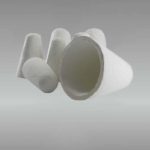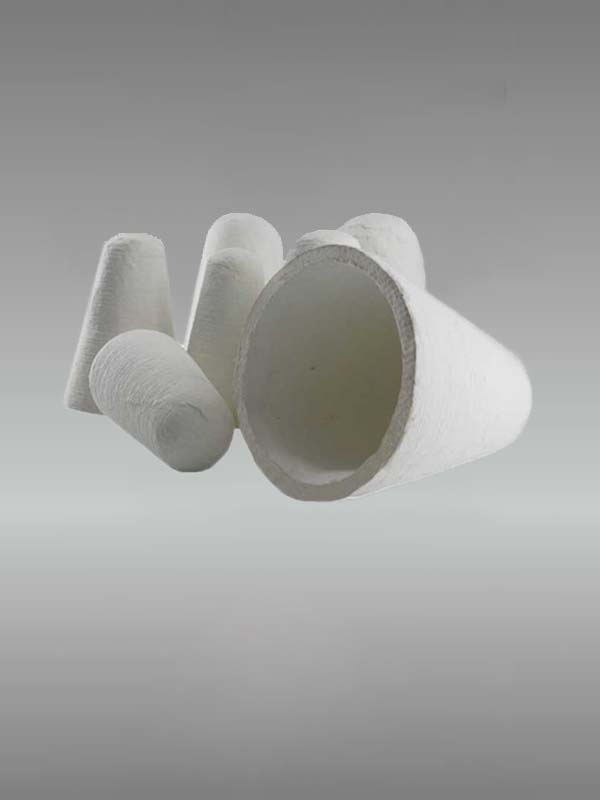
A tap out cone is a vacuum-formed refractory component used to control molten aluminum flow in CFF filter boxes, holding furnaces, and transfer launders. Made from high-alumina ceramic fiber (Al₂O₃ ≥45%), it provides a leak-free seal without sticking to aluminum or generating dross. Tap out cones replace traditional graphite and calcium silicate plugs in most casting operations, offering tighter fit, longer service life, and cleaner metal flow — critical factors in producing defect-free billets, slabs, and sheet ingots.
What Does a Tap Out Cone Actually Do in Aluminum Casting?
In any aluminum casting line, controlling the release of molten metal from the furnace or filter box is a deceptively simple task that goes wrong more often than most plant managers care to admit. The tap out cone sits in the drain or tap hole, sealing it until the operator is ready to initiate flow. When removed, metal drains at a controlled rate. When replaced, flow stops cleanly.
The problem with inferior cones — the kind stamped from loose fiber board or hand-packed from bulk material — is that they erode mid-cast, stick to the tap hole lining, or shed fiber fragments into the melt. Any of these failures introduces inclusions into the aluminum, which show up downstream as surface defects, reduced mechanical properties, or outright rejection by the customer.
A well-engineered tap out cone eliminates these issues. It must be dense enough to resist erosion from aluminum at 700–750 °C, elastic enough to conform to minor irregularities in the tap hole geometry, and chemically inert so it neither contaminates the melt nor bonds to the refractory lining.
How Is a High-Alumina Fiber Tap Out Cone Manufactured?
The manufacturing process matters more than most buyers realize. There are essentially three ways to produce a ceramic fiber tap out cone:
- Hand packing — cheap, inconsistent, and prone to density variation
- Wet pressing — better uniformity, but limited shape complexity
- Automatic vacuum forming — delivers the tightest density control and highest finished-product yield
Vacuum forming works by drawing a fiber slurry through a shaped mold under negative pressure. The result is a component with uniform mass distribution throughout its cross-section — no soft spots, no voids, no layering artifacts. This is why vacuum-formed cones consistently outperform pressed or hand-packed alternatives in field use.
Production yield for vacuum-formed tap out cones reaches approximately 99%, which keeps unit cost low despite the more sophisticated tooling involved. Each cone is dried, inspected for dimensional accuracy, and sorted by size before packaging.
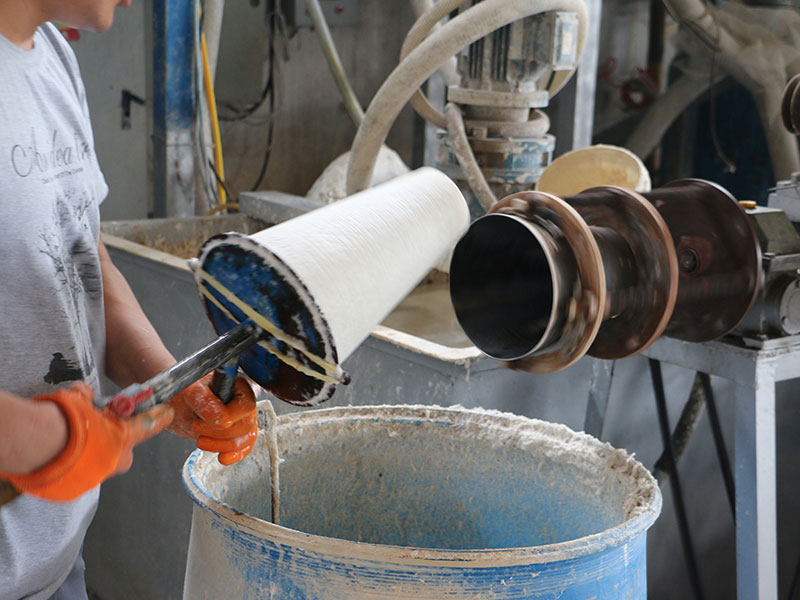
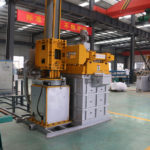
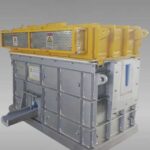
manufacturing process of Tap OUT Cone
Key Manufacturing Parameters
| Process Attribute | Vacuum Forming | Wet Pressing | Hand Packing |
|---|---|---|---|
| Density uniformity | Excellent | Good | Poor |
| Dimensional tolerance | ±0.5 mm | ±1.0 mm | ±2.0 mm |
| Finished product yield | ~99% | ~93% | ~85% |
| Shape flexibility | High (custom molds) | Moderate | Limited |
Specification
| Items | Length | Shape | Package | Special Package |
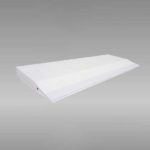
| Tap out cone | 20-350mm | Cone shape / cylinder / open shape | 100-300pcs/box | As required |
For plants with multiple furnace types, keeping several size variants in stock is common. If you’re unsure which tap out cone fits, AdTech can recommend the right size based on your tap hole diameter and depth.
Chemical Composition of Tap Out Cone Material
The raw material is a high-alumina ceramic fiber blend optimized for non-wetting behavior against molten aluminum. Here is the typical chemical analysis:
Chemical component
| Chemical Composition | AL2O3 | SiO2 | Fe2O3 | TiO2 |
| Model Parameter(%) | 45.28 | 51.79 | 0.3 | 1.3 |
What Are the Technical Performance Characteristics?
Beyond chemistry, the physical and thermal properties determine how a tap out cone performs in actual service.
Technical Parameters
| Item | Density g. cm3 |
Rupture modulus (816℃ Mpa) |
Thermal expansivity (680℃ K-1) |
Thermal conductivity
540℃W/k.m |
Max operating temperature (℃ ) |
| Index(%) | 0.3 | 1.5 | 1.56*10-6 | 0.05 | 1100 |
A few things stand out here. The density of 0.3 g/cm³ makes these cones extremely lightweight — easy to handle, easy to insert, and less likely to damage the tap hole lining during installation. The thermal conductivity of 0.05 W/(K·m) is very low, meaning the cone acts as an effective insulator. This prevents localized freezing of aluminum around the tap hole during pauses in casting, a common problem with denser plug materials.
The maximum operating temperature of 1100 °C provides a wide safety margin above typical aluminum casting temperatures (680–760 °C), so the cone won’t degrade even during extended holds at elevated temperature.
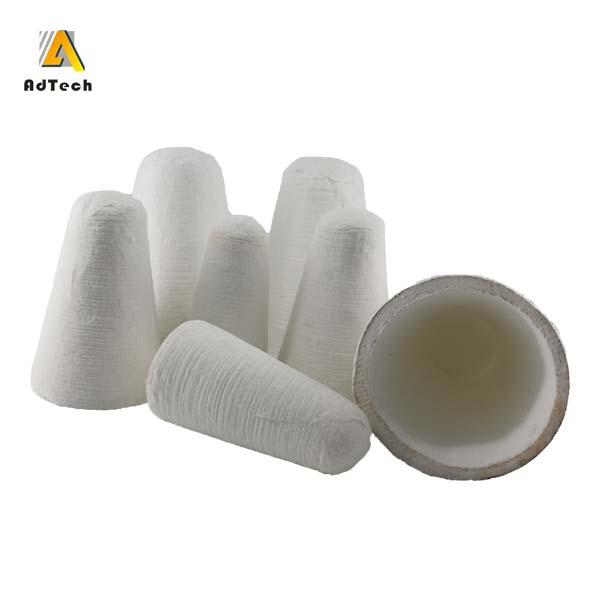
Aluminium Foundry Tap Plugs
What to Look for in a Tap Out Cone Supplier
Not all suppliers are equal, and the cheapest option rarely delivers the best per-ton economics. In real casting operations, what matters is not just price per piece, but whether the cone seals consistently, releases cleanly, and helps keep the melt free from added contamination. Here’s what to look for:
- Vacuum forming capability — insist on it. A well-made tap out cone should be produced by vacuum forming of high-aluminum fiber, which gives it a more uniform structure and helps prevent sticking to molten aluminum or generating slag. Compared with pressed or hand-packed cones, vacuum-formed products offer better density consistency, cleaner release, and more reliable dimensional accuracy.
- Uniform fiber distribution and good elasticity — this is one of the most overlooked points. When the mass is evenly distributed, the cone seats more tightly in the tap hole, provides stable blockage, and gives operators better flow control during tapping. Good elasticity also helps the cone adapt to minor wear in the tap hole without leaking.
- High hardness and long service life — a cone that is too soft can deform, wear quickly, or leave fragments behind. Higher hardness usually translates into better abrasion resistance, cleaner handling, and longer usable life in demanding furnace conditions.
- Custom sizing — your supplier should be willing to produce cones matched to your actual tap hole dimensions, not just offer a few standard sizes. In many aluminum plants, the difference between a reliable seal and a leaking one comes down to a few millimeters.
- Chemical analysis certificates — you should be able to review batch-level composition data, especially for critical values such as Fe₂O₃ content. This is particularly important for plants producing alloys with tight cleanliness requirements.
- Technical support — a good supplier should help verify dimensions, recommend the right shape, and troubleshoot issues such as difficult removal, inconsistent sealing, or premature wear. That kind of practical support matters far more than a low quote on paper.
- Consistent lead times — if you are ordering on a monthly or quarterly cycle, supply stability is part of product performance. A missed shipment can disrupt the whole casting schedule.
All products in this category should maintain low shrinkage within the applicable temperature range while preserving high thermal insulation. They should be lightweight, impact resistant, and able to withstand abrasion and peeling in routine use. A properly specified ceramic fiber tap out cone should not be attacked by most molten metals, can directly contact flame, and should contribute to better casting cleanliness rather than become another source of defects.
That is the standard we work to. At AdTech, our tap out cones are designed around the actual needs of aluminum foundries and casting plants: vacuum-formed high-alumina fiber, stable quality, custom dimensions when needed, and practical technical support from people who understand molten aluminum handling. If you are reviewing your current plugging method, we can help you select the right cone size, confirm suitable material data, and recommend a better-fit solution together with our molten aluminum casting consumables.
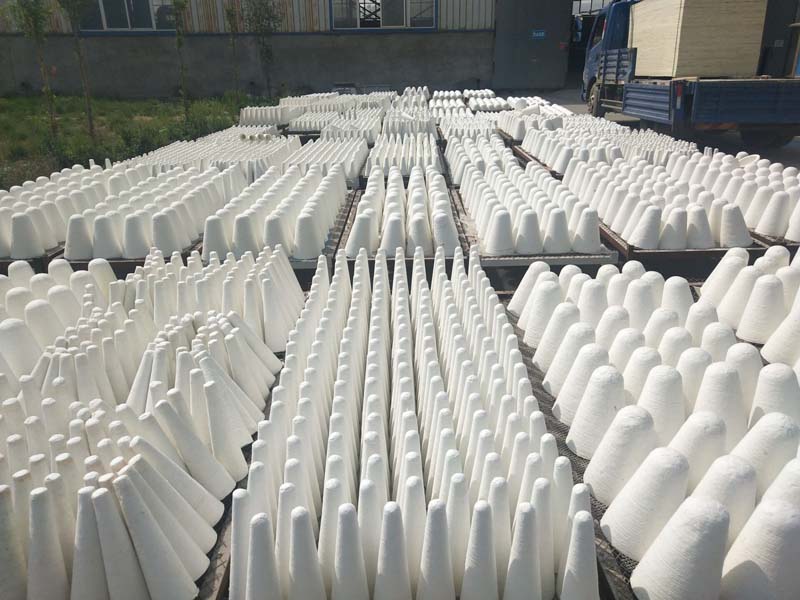
AdTech Tap Out Cone
Why Do Tap Out Cones Outperform Traditional Tap Hole Plugs?
I’ve seen plants that still use calcium silicate plugs, graphite cones, or even improvised compressed-fiber wads to plug their tap holes. These all work — until they don’t. Here’s what typically goes wrong and why purpose-built vacuum-formed cones are a better choice:
Non-stick performance. Molten aluminum wets most oxide surfaces. A conventional refractory plug will gradually bond to the tap hole lining, making removal difficult and eventually damaging the hole geometry. High-alumina vacuum-formed cones resist aluminum wetting, so they pull cleanly every time.
No slag generation. Inferior plugs erode and shed particles into the melt. These particles become nucleation sites for oxide inclusions — exactly the kind of defect that inline ceramic foam filters are designed to catch. By using a non-slagging cone upstream of the filter, you extend filter life and reduce total inclusion load.
Elasticity and seal quality. Because the fiber matrix is uniformly distributed, vacuum-formed cones compress slightly when inserted, conforming to the tap hole profile. This produces a gas-tight seal — no leaking, no weeping, no fire hazards from dripping aluminum.
Consistency cast to cast. When every cone is functionally identical, operators don’t have to guess whether this particular plug will hold. That consistency reduces human error and makes the casting process more predictable.
How to Select the Right Tap Out Cone for Your Furnace
Choosing the right cone comes down to matching four variables:
- Tap hole geometry — Measure the top diameter, bottom diameter, and depth. If the hole is tapered, you need a tapered cone. If it’s straight, a cylindrical plug may work better.
- Operating temperature — Standard aluminum casting (680–760 °C) is well within the 1100 °C limit. For higher-temperature applications or furnaces with long hold times, confirm the cone’s rated continuous service temperature.
- Metal alloy — Some alloys (particularly high-magnesium series like 5xxx) are more aggressive toward refractories. If you’re casting these alloys, ask your supplier about compatibility testing.
- Removal method — Some operators pull cones manually with tongs; others use pneumatic tools. The cone’s hardness and fracture behavior should be compatible with your removal method.
If your furnace uses a non-standard tap hole — and many do, especially older installations — custom-molded cones shaped to your specific dimensions are available. This is where vacuum forming really shows its advantage, since new mold profiles can be produced without retooling an entire press line.
How Long Does a Tap Out Cone Last?
This is one of the most common questions, and the honest answer is: it depends on your operation. A single cone is typically used for one cast cycle — inserted at the start, removed to initiate flow, and reinserted to stop flow. Some operators reuse cones for two or three cycles if the cone is still structurally sound and seats cleanly in the tap hole.
Factors that shorten cone life include:
- Aggressive alloys (high Mg or Li content)
- Oversized or irregularly shaped tap holes
- Rough handling during insertion or removal
- Excessively long hold times at elevated temperatures
In practice, most plants treat tap out cones as single-use consumables and factor them into per-cast cost calculations. At typical consumption rates of one cone per cast, the cost per ton of aluminum produced is negligible — usually well under $0.10/ton.
Storing and Handling Tap Out Cones
Ceramic fiber tap out cones are not fragile in the way that, say, ceramic foam filters are — but they do deserve basic care:
- Store in a dry, covered area. The fiber matrix can absorb moisture, which causes steam generation on first contact with molten aluminum. This isn’t dangerous in most cases, but it can cause spitting and should be avoided.
- Keep cones in their original packaging until use. Loose cones rolling around on a shelf pick up dust, oil, and mechanical damage.
- Inspect each cone before insertion. Look for chips, cracks, or areas where the surface fiber has been abraded away. A compromised cone may not seal properly.
- If you’re using cones that have been in storage for an extended period, pre-dry them at 150–200 °C for 30 minutes before use to drive off absorbed moisture.
FAQ
1. What is a Tap Out Cone?
A Tap Out Cone is a refractory fiber plug used to control molten aluminum flow in a CFF filter box, kiln, or furnace tap hole.
2. What material is a Tap Out Cone made of?
It is typically made of vacuum-formed high-aluminum ceramic fiber, which offers good insulation, non-stick performance, and stable sealing.
3. What is the main function of a Tap Out Cone?
Its main function is to block or release aluminum liquid flow accurately, helping operators maintain stable and clean casting conditions.
4. Why does a high-alumina Tap Out Cone not stick to aluminum?
High-alumina fiber has good resistance to molten aluminum attack, so it is less likely to stick, react, or create slag during use.
5. Where is a Tap Out Cone used?
It is widely used in aluminum melting and casting systems, especially in CFF filter boxes, launders, holding furnaces, and kilns.
6. How do I choose the right Tap Out Cone size?
Measure the tap hole’s top diameter, bottom diameter, and depth. Based on these dimensions, the correct cone size can be selected.
7. Can Tap Out Cones be custom made?
Yes. Tap Out Cones can be produced in custom lengths, diameters, and shapes to match different furnace and filter box designs.
8. What are the advantages of vacuum-formed Tap Out Cones?
They offer uniform density, good elasticity, tight blockage, stable flow control, high hardness, and a longer service life.
9. What is the maximum operating temperature of a Tap Out Cone?
The maximum operating temperature is typically around 1100°C, which is suitable for most aluminum casting applications.
10. How can a good Tap Out Cone improve casting quality?
A high-quality Tap Out Cone helps reduce sticking, slag formation, leakage, and flow instability, which supports cleaner metal and better casting results.