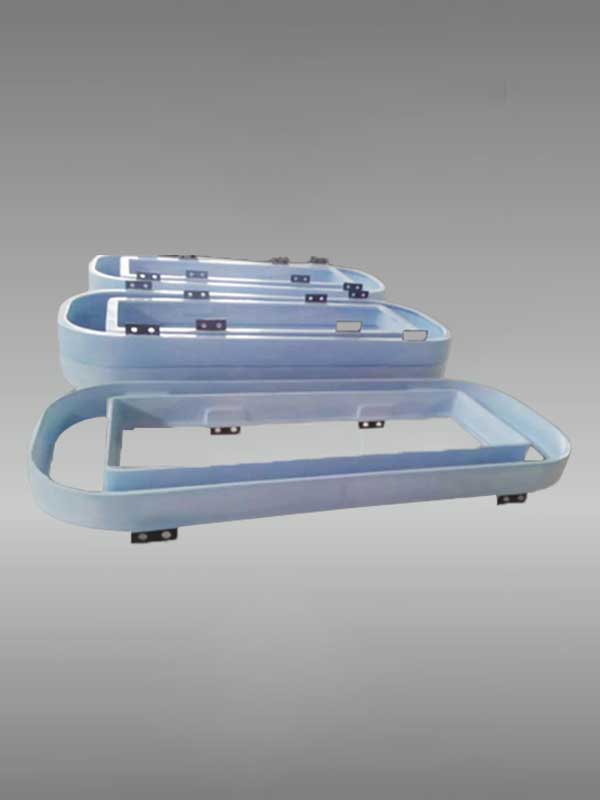
Fast, Clean Aluminum Dross Removal Starts Here
A skim ring sits on the molten aluminum surface inside the furnace, creating a physical barrier that separates dross from clean metal before tapping. Made from ceramic fiber reinforced with binder systems, it withstands temperatures up to 1200°C while maintaining structural integrity across multiple heats. The result: higher aluminum recovery rates (typically 92–97%), less metal loss, and faster furnace turnaround. If you run a casthouse, remelt facility, or secondary smelter, this is the tool that pays for itself within weeks.
Product Specifications at a Glance
| Parameter | Value |
|---|---|
| Material | Alumina-Silica Ceramic Fiber Composite |
| Al₂O₃ Content | 40%–50% (standard) / 50%–60% (high-alumina grade) |
| SiO₂ Content | 35%–45% |
| Max Service Temperature | 1200°C (2192°F) |
| Bulk Density | 0.4–0.6 g/cm³ |
| Available Diameters | 300 mm – 2000 mm (custom sizes available) |
| Ring Thickness | 30 mm – 80 mm |
| Thermal Conductivity (600°C) | ≤ 0.15 W/m·K |
| Usage Life | Single-use or up to 3–5 heats (depending on grade) |
| Color | White / Light Grey |
What Is a Skim Ring and How Does It Work?
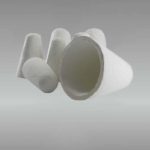
A skim ring—also called a dross ring, dross separation ring, or skimming ring—is a lightweight ceramic fiber ring placed on the surface of molten aluminum inside a melting or holding furnace. It floats at the metal-dross interface and serves one clear purpose: confine dross to a specific zone so it can be removed cleanly without dragging good metal out with it.
Here’s the process in practice:
- The ring is placed on the molten aluminum surface near the end of a melt cycle.
- Dross accumulates inside (or outside) the ring boundary.
- The operator skims only the dross-concentrated area.
- Clean aluminum remains undisturbed, ready for tapping or transfer.
Without a skim ring, operators pull significantly more aluminum out with the dross—industry estimates suggest 5–10% of total metal loss during uncontrolled skimming. A properly sized ring cuts that figure dramatically.
Why Do Aluminum Casthouses Need Dross Separation Rings?
Every ton of aluminum you lose in dross costs money. In a mid-size casthouse producing 50,000 tonnes per year, even a 2% improvement in metal recovery translates to 1,000 tonnes of saved aluminum annually. At current LME prices, that’s a significant bottom-line impact.
Key Benefits:
- Higher metal recovery – Recover 92–97% of aluminum from each heat
- Reduced dross volume – Less material to process or send to dross reclaimers
- Faster skimming cycles – Operators spend less time per furnace
- Lower energy consumption – Less re-melting of recovered dross
- Cleaner metal quality – Fewer oxide inclusions in final product
- Low thermal conductivity – Insulates the melt surface, reducing heat loss
What Types of Skim Rings Are Available?
We manufacture three main grades to match different furnace conditions and operational budgets:
Standard Grade (Single-Use)
Built for operations where cost-per-heat matters most. Bulk density around 0.4 g/cm³, suitable for holding furnaces and lower-temperature applications (up to 1000°C). Ideal for secondary aluminum recyclers processing mixed scrap.
Medium-Duty Grade (2–3 Heats)
Reinforced binder system provides additional strength for repeated use. Works well in tilting furnaces and reverberatory furnaces where ring handling is rougher. Al₂O₃ content typically 45–50%.
High-Alumina Grade (3–5 Heats)
Premium option with 50–60% alumina content and enhanced erosion resistance. Designed for primary smelters and high-volume casthouses running 24/7. Withstands aggressive flux treatments and mechanical skimming equipment.
How Does a Skim Ring Improve Aluminum Recovery Rate?
Metal recovery improvement comes down to separation precision. During conventional skimming, the operator drags a tool across the entire furnace surface. Dross and clean aluminum mix freely, and the removed material often contains 50–70% recoverable metal.
With a skim ring in place:
- Dross is physically contained in a defined area
- The operator skims a smaller, concentrated zone
- Clean metal stays outside the ring boundary
- Total aluminum pulled out with dross drops by 40–60%
For a 40-tonne furnace, this means recovering an additional 200–400 kg of aluminum per heat. Over hundreds of heats per year, the savings compound fast.
What Furnace Types Are Compatible with Ceramic Fiber Skim Rings?
Our skim rings are used across virtually every furnace type in the aluminum industry:
- Reverberatory melting furnaces – Most common application; rings sized 800–2000 mm
- Tilting rotary furnaces – Require higher mechanical strength grades
- Holding and transfer furnaces – Standard grade works well due to lower turbulence
- Induction furnaces – Smaller diameter rings (300–600 mm)
- Twin-chamber furnaces – Used in the clean metal chamber before tapping
Skim Ring vs. Dross Dam vs. Dross Barrier – What’s the Difference?
These terms are often used interchangeably, but there are functional distinctions:
| Feature | Skim Ring | Dross Dam | Dross Barrier |
|---|---|---|---|
| Shape | Circular ring | Linear wall/block | Linear or curved partition |
| Placement | Floats on melt surface | Fixed in furnace structure | Semi-permanent or removable |
| Material | Ceramic fiber composite | Refractory castable | Ceramic fiber or castable |
| Best For | Batch skimming operations | Continuous flow furnaces | Multi-zone furnace separation |
| Reusability | 1–5 heats | Permanent | 10–50+ heats |
A skim ring offers the most flexibility because it requires no furnace modification—just drop it on the surface and start skimming.
How to Select the Right Skim Ring Size for Your Furnace
Choosing the correct diameter is critical. Too large and it won’t fit; too small and dross escapes around the edges.
General sizing rule: The ring outer diameter should be 50–100 mm smaller than the furnace inner diameter to allow easy placement while maintaining an effective seal against the furnace wall or metal surface.
Sizing Guide
| Furnace Capacity | Recommended Ring OD | Ring Thickness |
|---|---|---|
| 5–10 tonnes | 300–600 mm | 30–40 mm |
| 10–25 tonnes | 600–1200 mm | 40–60 mm |
| 25–50 tonnes | 1200–1600 mm | 50–70 mm |
| 50–80 tonnes | 1600–2000 mm | 60–80 mm |
Custom shapes—including oval, rectangular, and half-ring configurations—are available for non-standard furnace geometries.
What Makes Our Ceramic Fiber Skim Rings Different?
We’ve been manufacturing ceramic fiber products for the aluminum industry for over 15 years. Our skim rings are engineered—not just cut from generic blanket material.
Manufacturing process highlights:
- Vacuum-formed construction – Uniform fiber distribution, no weak spots
- Precision-cut to your furnace dimensions – Tolerances within ±2 mm
- Non-wetting surface treatment – Reduces aluminum adhesion to the ring
- No organic binders – Eliminates outgassing and smoke at first contact with molten metal
- Consistent density control – Every ring is weighed and measured before shipping
We supply to casthouses in North America, Europe, the Middle East, and Southeast Asia. Typical lead time: 7–15 business days for standard sizes, 15–20 days for custom orders.
How to Use a Skim Ring – Step-by-Step
- Preheat recommended (optional but extends life) – Place the ring near the furnace door for 5–10 minutes before use
- Position the ring on the molten aluminum surface using a forklift-mounted tool or manual placement rod
- Allow dross to accumulate inside the ring for 3–5 minutes
- Skim the dross from inside the ring using standard skimming tools
- Remove or reposition the ring as needed for the next skimming cycle
- Dispose or store – Single-use rings go to waste; multi-use rings can be stored dry for the next heat
Safety note: Always wear appropriate PPE including heat-resistant gloves, face shield, and aluminized clothing when working near molten metal.
Request A Quote
Industries and Applications
Skim rings serve any operation that melts, holds, or transfers molten aluminum:
- Primary aluminum smelters – Potline metal treatment
- Secondary aluminum recyclers – Scrap remelting operations
- Aluminum die casting plants – Holding furnace maintenance
- Aluminum extrusion facilities – Billet casting preparation
- Aluminum rolling mills – Slab casting and furnace cleaning
- Automotive parts manufacturers – Engine block and wheel casting
- Aerospace aluminum suppliers – High-purity melt applications
FAQ
1. What is a skim ring used for in aluminum melting?
A skim ring confines dross on the molten aluminum surface so operators can remove it cleanly without losing excessive good metal. It improves aluminum recovery by 3–8% per heat.
2. How many times can a skim ring be reused?
Standard grade rings are single-use. Medium-duty rings last 2–3 heats. High-alumina rings can survive 3–5 heats depending on flux exposure and handling conditions.
3. What temperature can a ceramic fiber skim ring withstand?
Our skim rings are rated for continuous use up to 1200°C (2192°F), well above the typical aluminum melting range of 660–750°C.
4. What size skim ring do I need for my furnace?
Measure your furnace inner diameter and subtract 50–100 mm. That gives you the target ring outer diameter. Contact us with your furnace specs for an exact recommendation.
5. Does a skim ring reduce dross generation?
It doesn’t reduce dross generation itself—dross forms from oxidation regardless. What it does is separate dross from clean metal so you remove less aluminum during skimming.
6. Can skim rings be used with fluxing operations?
Yes. Our medium-duty and high-alumina grades are compatible with standard salt-based fluxes. Aggressive fluoride fluxes may reduce ring life by 30–50%.
7. What is the difference between a skim ring and a dross ring?
They’re the same product. “Skim ring,” “dross ring,” “skimming ring,” and “dross separation ring” all refer to the ceramic fiber ring used for dross confinement during aluminum melting.
8. How should skim rings be stored?
Store in a dry, covered area away from moisture. Ceramic fiber is hygroscopic—wet rings can cause dangerous steam explosions when placed on molten metal. Always inspect before use.
9. Do you supply custom-shaped skim rings?
Yes. We manufacture oval, rectangular, half-ring, and other non-standard geometries. Provide a drawing or furnace dimensions and we’ll produce a matched ring.
10. What is the typical lead time for skim ring orders?
Standard sizes ship within 7–15 business days. Custom orders require 15–20 business days. Expedited production is available for urgent requirements—contact our sales team for details.