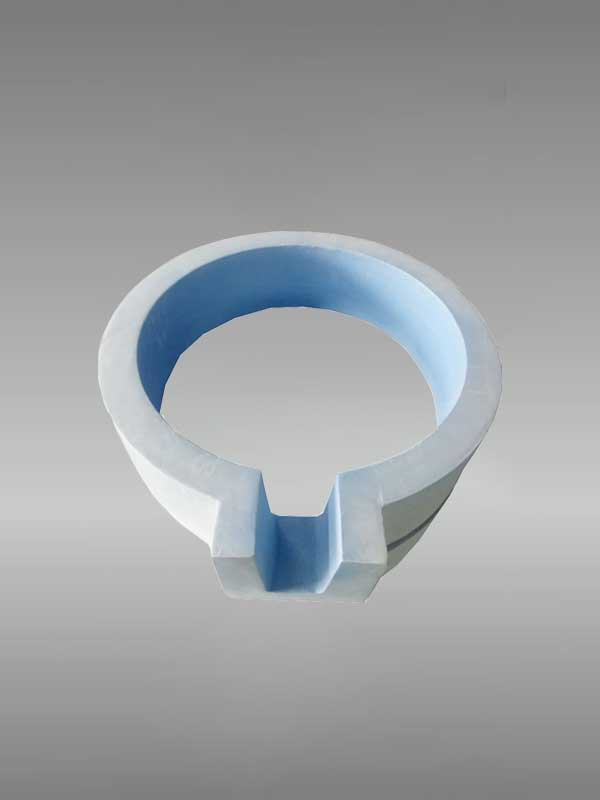
Technical Specifications
Available Sizes
| 3in | 3.5in | 4.5in | 5in | 5.5in | 6in | 6.5in | 7in |
| 8in | 9in | 10in | 12in | 14in | 16in | 18in | 20in |
Technical Parameter
| Item | Denisity (g/cm3) |
Compression Strength (Mpa) |
Thermal Expansivity (X*10-6/℃) |
Max Working Temperature (℃) |
| Index | 1.4-1.5 | 15-16 | 4-4.5 | >1000 |
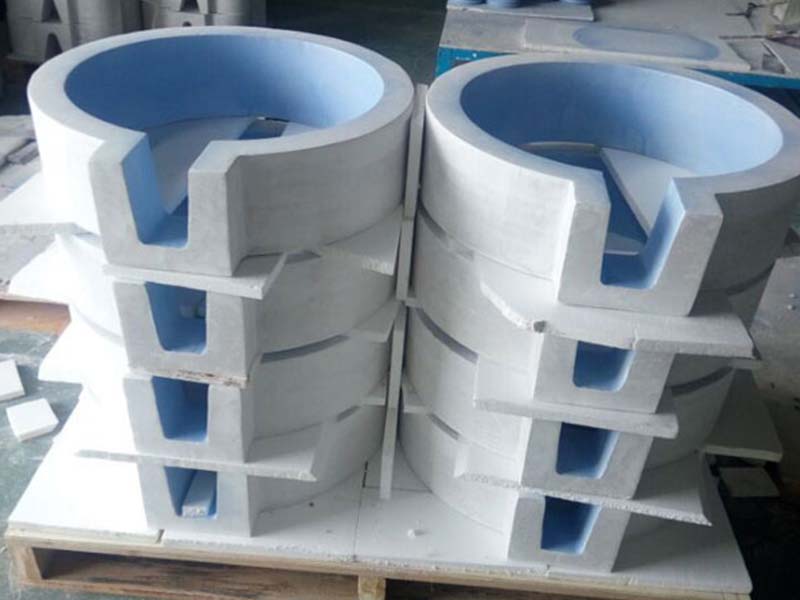
Pouring Cup
Request A Quote
What Is a Pouring Cup?
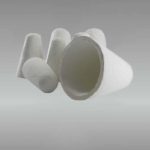
A pouring cup is an important component used in the aluminum and aluminum alloy rod casting process. It is installed at the start of the casting system and plays a critical role in controlling the flow of molten aluminum into the crystallizer.
During aluminum rod production, molten aluminum must enter the crystallizer in a stable and controlled manner. The pouring cup ensures that the molten metal flows smoothly, evenly, and without turbulence.
Without a properly designed pouring cup, molten aluminum flow becomes unstable, which can disrupt temperature distribution inside the crystallizer and negatively affect the solidification process.
Function of Pouring Cup in Aluminum Casting
The main function of the pouring cup is to guide molten aluminum into the crystallizer in a controlled way.
It helps:
- Stabilize molten aluminum flow
- Reduce turbulence during pouring
- Improve temperature uniformity in the crystallizer
- Support smooth solidification of aluminum rods
- Reduce casting defects caused by unstable flow
In aluminum rod casting systems, even small flow fluctuations can affect final product quality. The pouring cup acts as a flow stabilizing component that ensures consistent casting performance.
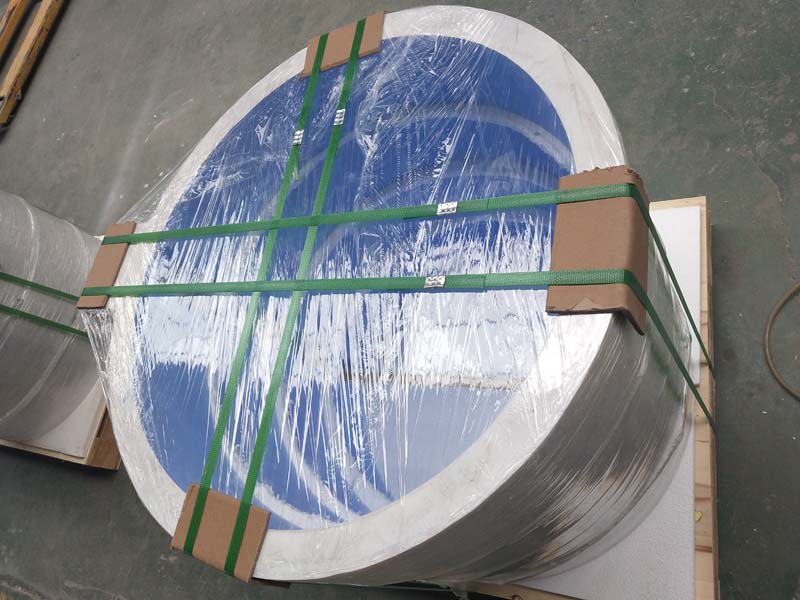
Hop tap Pouring Cup
Why Pouring Cup Is Important in Aluminum Rod Production
In continuous casting of aluminum rods, the quality of molten metal flow directly affects:
- Grain structure
- Surface quality
- Internal porosity
- Mechanical performance
If molten aluminum enters the crystallizer too fast or too irregularly, it can create turbulence, uneven cooling, and unstable temperature fields.
This leads to defects such as:
- Surface roughness
- Cracks
- Internal inclusions
- Inconsistent rod structure
The pouring cup helps eliminate these issues by controlling flow behavior before the molten metal reaches the crystallizer.
Working Principle of Pouring Cup
The pouring cup works by acting as a buffer and flow stabilization chamber.
When molten aluminum enters the cup, the flow is slowed down and redistributed before entering the crystallizer. This reduces direct impact and turbulence, allowing the metal to enter the crystallizer in a smoother and more controlled state.
At the same time, the design of the pouring cup helps maintain a more stable temperature field, which is critical for uniform solidification of aluminum rods.
Advantages of AdTech Pouring Cup
Stable Molten Aluminum Flow
Ensures smooth and consistent metal flow into the crystallizer, reducing turbulence and flow instability.
Improved Casting Quality
Helps reduce defects such as surface irregularities, inclusions, and internal porosity.
Better Temperature Control
Supports a more uniform temperature field inside the crystallizer, improving solidification consistency.
High Thermal Stability
With a maximum working temperature above 1000℃, the pouring cup maintains stable performance under continuous casting conditions.
High Mechanical Strength
Good compression strength ensures durability under molten aluminum flow pressure and long-term operation.
Applications of Pouring Cup
Pouring cups are widely used in:
- Aluminum rod continuous casting lines
- Aluminum alloy billet production
- Rolling mill feedstock casting systems
- Industrial aluminum extrusion production
- Secondary aluminum remelting operations
They are essential components in any system where stable molten aluminum flow is required.
Relationship with Complete Aluminum Melt Treatment System
In modern aluminum production, pouring cups are part of a complete melt handling system, which may also include:
- Refining flux for hydrogen removal
- Slagging flux for aluminum recovery
- Covering flux for oxidation protection
- Online degassing systems for hydrogen control
- Ceramic foam filters for inclusion removal
- Launder systems for molten metal transfer
Each component plays a role in ensuring high-quality molten aluminum before and during casting.
AdTech provides a complete aluminum melt treatment system including fluxes, degassing equipment, and filtration solutions.
For technical support or quotation, please contact us 24/7.
Improve Aluminum Casting Stability with AdTech Pouring Cup
Stable molten aluminum flow is essential for producing high-quality aluminum rods with consistent structure and performance.
AdTech Pouring Cup helps control molten aluminum flow into the crystallizer, improve temperature stability, reduce casting defects, and support efficient aluminum rod production.
Combined with complete molten aluminum treatment solutions, AdTech pouring cup contributes to more stable casting operations, higher product quality, and improved production efficiency.
FAQ
1. What is a pouring cup in aluminum casting?
A pouring cup is a flow-control component that guides molten aluminum into the crystallizer in a stable and controlled manner.
2. What is the main function of a pouring cup?
Its main function is to stabilize molten aluminum flow and ensure smooth, uniform entry into the crystallizer.
3. Why is pouring cup important in aluminum rod casting?
It prevents turbulence and unstable flow, which helps improve rod quality and reduce casting defects.
4. What happens if there is no pouring cup?
Without a pouring cup, molten aluminum flow becomes unstable, causing poor temperature distribution and casting defects.
5. What material is a pouring cup made of?
It is typically made of high-temperature resistant refractory materials designed for molten aluminum applications.
6. What is the working temperature of a pouring cup?
A high-quality pouring cup can operate above 1000°C in continuous aluminum casting environments.
7. Does pouring cup affect aluminum quality?
Yes. It improves flow stability, which helps reduce porosity, cracks, and surface defects in aluminum rods.
8. Where is pouring cup used?
It is used in aluminum rod casting lines, billet casting systems, and continuous casting production.
9. Is pouring cup part of a melt treatment system?
Yes. It works together with degassing, filtration, and launder systems to improve overall melt quality.
10. How does pouring cup improve casting stability?
It reduces turbulence and stabilizes molten aluminum flow, ensuring consistent solidification in the crystallizer.